Qwen 3.8 is open: running an AI model on your own server is becoming normal
Alibaba has released Qwen 3.8 with open weights. At first glance that reads as news for developers. I think it is news for you too, if you ever wonder where your customer data actually ends up and what your AI bill will look like next year.
What Alibaba released
Alibaba's Qwen team published Qwen 3.8 under the Apache 2.0 license. Open weights means you can download the model and run it yourself. Apache 2.0 permits commercial use, including work you earn money with.
The dense 27-billion-parameter model is said to outperform the larger Qwen 3.7 Plus on coding and office tasks, according to The Decoder. It handles up to 262,000 tokens of context, enough to read a thick stack of documents in one go. With this release, Qwen aims at people building local applications and agents.
That last part is why I am writing it down. Running a model locally has stopped being a hobby project.
Why an open model matters to you
Almost every AI tool you use today sits with an American provider. You send it your quotes, your customer questions, your email threads. You pay by the month, by the user. That works fine, right up until the price changes or the model gets swapped for a new version that answers slightly differently.
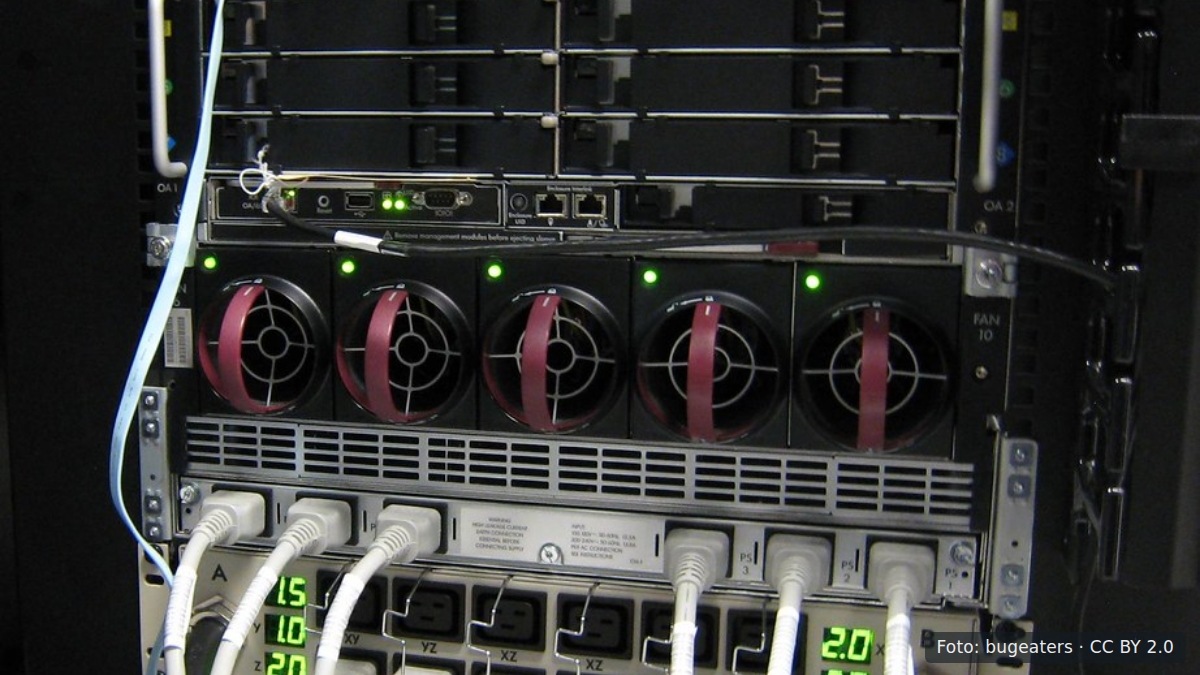
An open model shifts that balance. You put it on your own server, in a Dutch data centre if you want. Your customer data stays where you put it. Your costs are hardware and electricity, and you know those in advance. Nobody raises the per-user rate halfway through the year.
What I want to be honest about
Free is the wrong word. You need a machine that can handle this, someone to install it and someone to keep it running. For a single business owner with a laptop, doing all that yourself is rarely worth the trouble.
It gets interesting once AI becomes a fixed part of your work, or once you handle data you would rather not send anywhere. Case files. Staff records. Things about customers you would not say out loud in a café.
And yes, the model comes from a Chinese company. What you download are the weights: a file on your own disk. Once it runs on your server, nothing goes back to Alibaba. That is the difference between using a model and buying a service.
What you can do with this tomorrow
You do not have to install anything today. But do this:
- Write down what you pay for AI each month. Every separate tool, including the fifteen-euro one nobody opens anymore. Without that number you cannot compare anything later.
- Look at what data flows through those tools. Is there anything you would not casually email to a stranger? Then you have a reason to look at running things locally.
- Start with one task. Something that eats time and carries little risk. Summarising quotes, sorting mail, cleaning up meeting notes. Enough to feel whether it makes your work lighter.
I follow releases like this so you do not have to. If you want to know whether your work suits a model on your own server, email info@mia-automation.com. I will take a look with you.
Frequently asked questions
Can I really run a model like this myself, or do I need a technical team?
You need someone to install it and keep an eye on it. That does not have to be a team and it does not have to be you. It runs on a server you rent or buy, and after that the upkeep looks like any other server in your business: updates, backups, checking that it is still up.
What does it cost to run an AI model on your own server?
You pay for the machine and the power, not for the model itself. Apache 2.0 allows commercial use without licence fees. Whether it works out cheaper than your subscriptions depends on how much you use AI. Light use stays cheaper with a provider. Heavy daily use flips the maths.
Is an open model as good as the well-known paid ones?
For some tasks it comes close, for others it does not. Qwen says this model does better than their own larger version on coding and office tasks. That still tells you nothing about your work. The only honest test is your own practice: take one task you know well, let both handle it, and see which answer you would send to a customer without hesitating.